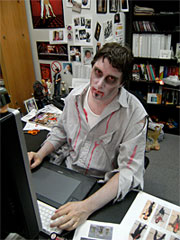
Low morale at the workplace isn’t just painful for your employees, it
hurts your company too. Poor employee morale can have devastating
effects on your business’ efficiency, growth and revenue.
1) Increased Absence From Work
The
emptiness of a chair yells out to you – Where has Tom been? You begin
to wonder if maybe he is okay, because he has been missing 2 days out of
every month.
2) Excessive Complaining Over Seemingly Small Matters
Jerry
can’t stand the fax machine, and he gives you an earful about it. The
next day it’s his chair, and the day after that it’s the color of the
carpeting.
3) Employee Conflicts
Excessive
drama and in-fighting can take their toll. It steals energy and
attention from employees that would otherwise go towards work
performance.
4) Poor or Little Communication with Management
Employee
engagement is at a bare minimum. All that is communicated is what is
essential, and that’s it. This can be hugely devastating. Employees no
longer feel free to input creative ideas that could really help
business. Shortened or tense communication can be a sign that something
isn’t right.
5) Zombie Employees
If you find
your staff is wandering around, groaning, and walking like they’re
half-dead, you might have a problem with workplace morale.
6) High Turnover Rate
Having to conduct job interviews and hire new employees to fill vacant spots can be costly in terms of time and resources.
Build Workplace Morale
The good news is that improving employee morale is possible and not that difficult. One way to boost workplace morale is to hire corporate entertainment like a clean comedian, magician, game show, mentalist or humorous speaker.
Bring your employees together and reward them for their hard work and dedication.
Giving
them space to relax and communicate outside the confines of the office
is a great way to increase communication and break the ice in an
informal environment and it gives everyone a shared experience to talk
about for months to come.
Wednesday, April 3, 2013
Is Your Company Turning You Into a Corporate Zombie?
Your company wants to turn you into a zombie. And you might be letting it happen.
Most employees are hired because they have personal vitality, which is a general sense of aliveness, creative thinking, communication style, presence, awareness, intellectual curiosity, and an untamed sense of humor. Then the subtle cultural cues set in as corporate zombie culture attempts to recruit another member.
It becomes clear that those who make it around here focus on efficiency and bottom-line results. They work long hours. They send email at 2 a.m. They answer their work cell phone at any time of the day or night, unless they're on a plane. They get a gold star for working late, skipping the gym, and taking that conference call at 5 a.m. to accommodate people in different time zones.
As they work, they mostly respond rather than get ahead of situations. Their creativity level drops, and they spend less time reflecting. They laugh less. They look more and more like other people in the office. They begin to parrot what the top leaders say, but with less enthusiasm than the leaders. After all, a key to moving up is to not outshine the boss. That sparkle in their eyes dims. They become corporate zombies.
A friend of mine was recently dinged in a performance appraisal for being "too enthusiastic." Translation: be less alive, more like a zombie.
Corporate zombie cultures thrive on brain eating. Not literally, but through reprimands and random firings that instill terror and drive people to sacrifice more, be more loyal, and stand out less.
Why are we talking about this now? Because zombie cultures rise during recessions and jobless recoveries, when the fear of losing a job is at its highest.
So what do we do here?
The first step is to recognize what's happening. Companies send subtle messages, especially to their managers, that conformity and sacrifice of one's uniqueness are good. They are not.
Second, become aware of the cost. Personal vitality is one factor in what colleagues and I call That Which Cannot Be Delegated -- that intangible quality that commands respect and attention, and encourages others to listen to what you say.
That Which Cannot Be Delegated has a lot to do with the leadership. In the movie "The Social Network," Sean Parker had it. Eduardo Saverin did not, which is part of why he was taken out. Zuckerberg did not have it.
Among presidents, John Kennedy had That Which Cannot Be Delegated. So did Reagan and Clinton. Jimmy Carter didn't. Neither did the first Bush. Most people I talk with think the second Bush also lacked it.
How to develop That Which Cannot Be Delegated is the subject of another post. The key here is that if you let the zombie-ification happen to you, chances are, you're giving up That Which Cannot Be Delegated, impairing your ability to lead.
Third, say "hell no!" to zombie cultures. The most effective leaders I know got through layers of management without ever losing their personal vitality, but it was a constant struggle. Do what they did: Draw boundaries and train those around you about your priorities. If you don't answer your cell phone on the second ring, it might be because you have something more important to do. These actions actually increase your levels of personal vitality and That Which Cannot Be Delegated.
Fourth, create a culture of aliveness and innovation. Find and connect with others who have said "hell no!" to the zombie siren song, and build new tribes around them.
Again and again, zombie cultures fail because they are outmaneuvered by people that are still alive and still find joy in their work.
Have you ever seen a zombie culture or been a part of one? If so, I hope you'll share it in an email to me or in the comments below.
Most employees are hired because they have personal vitality, which is a general sense of aliveness, creative thinking, communication style, presence, awareness, intellectual curiosity, and an untamed sense of humor. Then the subtle cultural cues set in as corporate zombie culture attempts to recruit another member.
It becomes clear that those who make it around here focus on efficiency and bottom-line results. They work long hours. They send email at 2 a.m. They answer their work cell phone at any time of the day or night, unless they're on a plane. They get a gold star for working late, skipping the gym, and taking that conference call at 5 a.m. to accommodate people in different time zones.
As they work, they mostly respond rather than get ahead of situations. Their creativity level drops, and they spend less time reflecting. They laugh less. They look more and more like other people in the office. They begin to parrot what the top leaders say, but with less enthusiasm than the leaders. After all, a key to moving up is to not outshine the boss. That sparkle in their eyes dims. They become corporate zombies.
A friend of mine was recently dinged in a performance appraisal for being "too enthusiastic." Translation: be less alive, more like a zombie.
Corporate zombie cultures thrive on brain eating. Not literally, but through reprimands and random firings that instill terror and drive people to sacrifice more, be more loyal, and stand out less.
Why are we talking about this now? Because zombie cultures rise during recessions and jobless recoveries, when the fear of losing a job is at its highest.
So what do we do here?
The first step is to recognize what's happening. Companies send subtle messages, especially to their managers, that conformity and sacrifice of one's uniqueness are good. They are not.
Second, become aware of the cost. Personal vitality is one factor in what colleagues and I call That Which Cannot Be Delegated -- that intangible quality that commands respect and attention, and encourages others to listen to what you say.
That Which Cannot Be Delegated has a lot to do with the leadership. In the movie "The Social Network," Sean Parker had it. Eduardo Saverin did not, which is part of why he was taken out. Zuckerberg did not have it.
Among presidents, John Kennedy had That Which Cannot Be Delegated. So did Reagan and Clinton. Jimmy Carter didn't. Neither did the first Bush. Most people I talk with think the second Bush also lacked it.
How to develop That Which Cannot Be Delegated is the subject of another post. The key here is that if you let the zombie-ification happen to you, chances are, you're giving up That Which Cannot Be Delegated, impairing your ability to lead.
Third, say "hell no!" to zombie cultures. The most effective leaders I know got through layers of management without ever losing their personal vitality, but it was a constant struggle. Do what they did: Draw boundaries and train those around you about your priorities. If you don't answer your cell phone on the second ring, it might be because you have something more important to do. These actions actually increase your levels of personal vitality and That Which Cannot Be Delegated.
Fourth, create a culture of aliveness and innovation. Find and connect with others who have said "hell no!" to the zombie siren song, and build new tribes around them.
Again and again, zombie cultures fail because they are outmaneuvered by people that are still alive and still find joy in their work.
Have you ever seen a zombie culture or been a part of one? If so, I hope you'll share it in an email to me or in the comments below.
How Zombies Are Ruining Your Job And Your Life
Zombies are taking over your company and your life. They want to eat your brain. Here's how to fight back.
The most interesting bit of research I saw last year came from Teresa Amabile and Steven Kramer on what really motivates workers. It turns out that the number one factor is a sense of progress on important work. Combine this finding with "decision fatigue" (studied in relation to judges' rulings), and we arrive that by the end of the day, your brain has been eaten by zombies. Each task you do involves a decision, and depletes your mental resources and likely, your motivation. For tasks that give you a sense of progress, let's call these "progress tasks," the well is partially refilled. Let's call tasks that offer no sense of progress "zombies." After a day of working on a "change the world" project, people can keep going. But an hour of TPS reports (the value-less work that plagued employees from the movie "Office Space") means an hour of zombies snacking on your brain.
It gets worse. The more zombies you kill, the more zombies the noise attracts. Try to answer all your email -- all of it. Tomorrow, you'll probably have as many unread emails as you had before you started. Catch up on your paperwork and your assistant probably has another stack he's been keeping for when that's done. Fill out a rebate card and zombies -- direct mail, spam, telemarketers -- will be chasing you for months.
And the really bad news is that they don't just affect individuals, they infest whole groups of people. I wrote last year about the rise of zombie cultures.
There are two things you can do about this zombie infestation.
First, take your routine work and find a way to track your progress. As a test, I woke up yesterday and had 555 unread emails. This was 555 zombies chasing me around. I set up an Excel spreadsheet, noting various times. By 5:48 p.m., when I left for a meeting, I had only 109 unread emails left. What was remarkable about this experience was that the feeling of getting through email felt completely different than the usual "oh crap, look at how many emails I have to get through." As my friend Daniel Mezick says, "make work a game, and you'll get more done and have more fun." His new book, The Culture Game is a great how-to on converting zombies to progress tasks.
Second, reduce the decisions required to get things done. David Allen artfully describes what happens when you look at a piece of paper, a report, an email, or anything else. Your brain asks: "What is this?" You have to make a decision -- increasing decision fatigue. As an example of how to reduce the number of decisions, ask everyone to put the following in the front line of an email message: "FYI," "Invitation," or "To do." An "FYI" means you need to read it but take no action. An invitation means you're being asked to consider doing something, and saying "no" is OK. The decision is simple: yes or no. And a "to do" needs to be put on your to do list or calendar. Notice that you never asked "What is this?" To strain the analogy, this email protocol doesn't cut the number of zombies, but it slows them down and makes them easier to kill. Combine this action with #1 above, and you transform zombies into -- are you sitting down -- fun things to do. My company CultureSync has just started this protocol and we have all been amazed at its impact.
Here are three other ways you can reduce zombies:
1. At the start of every meeting, ask "What do we need to accomplish, and do we agree that once we get that done, we can leave?" Now a meeting isn't a wait-out-the-clock affair, but gives you a sense of progress measured against goals.
2. Every time you deal with a zombie, see if you can prevent that zombie from coming back. Paying bills is zombies; automate that. Next time you see an automated email that adds no value, unsubscribe. Make zombie prevention a game, and you'll get a double bonus -- fewer zombies, and increased motivation. When I answered most of my 555 unread emails, I unsubscribed to 52 lists. Those zombies are gone for good.
3. Play more games. One year, I wanted to lose weight, so I tracked the total number of miles I ran on an Excel spreadsheet. This made it fun. My motivation increased even more because it was cool to see my progress as I tracked the average number of miles per day. I've written in other blog posts about the best time management tool ever, which is 20 minute segments. Commit to a certain number of segments, or miles, or books read, and you'll feel a sense of progress measured against your goals.
Have you found ways to turn zombies into progress tasks? Have you prevented some zombies from coming back? Or is your work life like a day from The Walking Dead? I hope you'll share what you're learning by posting a comment below.
The most interesting bit of research I saw last year came from Teresa Amabile and Steven Kramer on what really motivates workers. It turns out that the number one factor is a sense of progress on important work. Combine this finding with "decision fatigue" (studied in relation to judges' rulings), and we arrive that by the end of the day, your brain has been eaten by zombies. Each task you do involves a decision, and depletes your mental resources and likely, your motivation. For tasks that give you a sense of progress, let's call these "progress tasks," the well is partially refilled. Let's call tasks that offer no sense of progress "zombies." After a day of working on a "change the world" project, people can keep going. But an hour of TPS reports (the value-less work that plagued employees from the movie "Office Space") means an hour of zombies snacking on your brain.
It gets worse. The more zombies you kill, the more zombies the noise attracts. Try to answer all your email -- all of it. Tomorrow, you'll probably have as many unread emails as you had before you started. Catch up on your paperwork and your assistant probably has another stack he's been keeping for when that's done. Fill out a rebate card and zombies -- direct mail, spam, telemarketers -- will be chasing you for months.
And the really bad news is that they don't just affect individuals, they infest whole groups of people. I wrote last year about the rise of zombie cultures.
There are two things you can do about this zombie infestation.
First, take your routine work and find a way to track your progress. As a test, I woke up yesterday and had 555 unread emails. This was 555 zombies chasing me around. I set up an Excel spreadsheet, noting various times. By 5:48 p.m., when I left for a meeting, I had only 109 unread emails left. What was remarkable about this experience was that the feeling of getting through email felt completely different than the usual "oh crap, look at how many emails I have to get through." As my friend Daniel Mezick says, "make work a game, and you'll get more done and have more fun." His new book, The Culture Game is a great how-to on converting zombies to progress tasks.
Second, reduce the decisions required to get things done. David Allen artfully describes what happens when you look at a piece of paper, a report, an email, or anything else. Your brain asks: "What is this?" You have to make a decision -- increasing decision fatigue. As an example of how to reduce the number of decisions, ask everyone to put the following in the front line of an email message: "FYI," "Invitation," or "To do." An "FYI" means you need to read it but take no action. An invitation means you're being asked to consider doing something, and saying "no" is OK. The decision is simple: yes or no. And a "to do" needs to be put on your to do list or calendar. Notice that you never asked "What is this?" To strain the analogy, this email protocol doesn't cut the number of zombies, but it slows them down and makes them easier to kill. Combine this action with #1 above, and you transform zombies into -- are you sitting down -- fun things to do. My company CultureSync has just started this protocol and we have all been amazed at its impact.
Here are three other ways you can reduce zombies:
1. At the start of every meeting, ask "What do we need to accomplish, and do we agree that once we get that done, we can leave?" Now a meeting isn't a wait-out-the-clock affair, but gives you a sense of progress measured against goals.
2. Every time you deal with a zombie, see if you can prevent that zombie from coming back. Paying bills is zombies; automate that. Next time you see an automated email that adds no value, unsubscribe. Make zombie prevention a game, and you'll get a double bonus -- fewer zombies, and increased motivation. When I answered most of my 555 unread emails, I unsubscribed to 52 lists. Those zombies are gone for good.
3. Play more games. One year, I wanted to lose weight, so I tracked the total number of miles I ran on an Excel spreadsheet. This made it fun. My motivation increased even more because it was cool to see my progress as I tracked the average number of miles per day. I've written in other blog posts about the best time management tool ever, which is 20 minute segments. Commit to a certain number of segments, or miles, or books read, and you'll feel a sense of progress measured against your goals.
Have you found ways to turn zombies into progress tasks? Have you prevented some zombies from coming back? Or is your work life like a day from The Walking Dead? I hope you'll share what you're learning by posting a comment below.
Are You A Shoulder-Shrugger Or Commitment-Keeper?
“The dog ate my homework.”
Even though this famous excuse is rarely used, what it symbolizes is all-too-familiar: an aversion to admit accountability.
What’s more, the urge to excuse one’s blunders rather than shoulder them reveals a bigger issue: a lack of character.
Let’s be honest: No wants to entertain excuses — even perfectly good ones. We value friends who are reliable, we promote employees who are consistent, we love spouses because when they wrong us, they rectify it. Not for nothing did the sign on Harry Truman’s desk proclaim, “The buck stops here!”
Of course, emergencies arise, and we all screw up from time to time. Yet it’s how you fix things that counts, that makes you who you are.
For example, did your car break down? Do what my realtor did when this happened to him while house-hunting with a client: call a cab. “The show must go on,” Morgan explained. No excuses.
How about this well-worn crutch? “I was stuck in traffic… And parking was even worse.” Anyone who’s ever sat behind a steering wheel has bumped into these predicaments. That you didn’t prepare for them indicates a preference to make others wait rather than show up early. No excuses.
Here’s my favorite refrain: “I’ve been busy.” Nope. We make time for what’s important to us. Why not just say you dropped the ball and apologize? And then make up for it. No excuses.
If you say you’ll do something, don’t make your counterpart follow-up for an ETA. If you agree to call at a certain time, don’t make the person on the other end of the line wait. If a request is ambiguous, don’t foist the monkey back; assume the burden, and propose clarifications.
If you’re nodding, you’ll be gratified to know you’re in good company. At Apple, whenever an executive reached the level of vice president, Steve Jobs would deliver a short sermon. Jobs imagined the garbage in his office wasn’t being emptied, and when he asked the janitor why, the janitor shrugged. The locks were changed, and the janitor didn’t have a key.
This is understandable coming from someone who empties trash bins for a living. As Jobs put it, “When you’re the janitor, reasons matter.” But when you’re a VP, he continued, “reasons stop mattering.”
What matters, I would add, are commitments.
This Rubicon separates the shoulder-shrugger from the commitment-keeper — or the staffer from the manager, the manager from the VP, the VP from the C suite. To the commitment-keeper, it doesn’t matter who or what’s at fault; an excuse signifies a personal failure. To the commitment-keeper, nothing is more than important than keeping your word, and thus your integrity.
Think of this the next time you find yourself in a hole. Will you dig out with an alibi or accountability? The choice is yours.
No excuses.
Even though this famous excuse is rarely used, what it symbolizes is all-too-familiar: an aversion to admit accountability.
What’s more, the urge to excuse one’s blunders rather than shoulder them reveals a bigger issue: a lack of character.
Let’s be honest: No wants to entertain excuses — even perfectly good ones. We value friends who are reliable, we promote employees who are consistent, we love spouses because when they wrong us, they rectify it. Not for nothing did the sign on Harry Truman’s desk proclaim, “The buck stops here!”
Of course, emergencies arise, and we all screw up from time to time. Yet it’s how you fix things that counts, that makes you who you are.
For example, did your car break down? Do what my realtor did when this happened to him while house-hunting with a client: call a cab. “The show must go on,” Morgan explained. No excuses.
How about this well-worn crutch? “I was stuck in traffic… And parking was even worse.” Anyone who’s ever sat behind a steering wheel has bumped into these predicaments. That you didn’t prepare for them indicates a preference to make others wait rather than show up early. No excuses.
Here’s my favorite refrain: “I’ve been busy.” Nope. We make time for what’s important to us. Why not just say you dropped the ball and apologize? And then make up for it. No excuses.
If you say you’ll do something, don’t make your counterpart follow-up for an ETA. If you agree to call at a certain time, don’t make the person on the other end of the line wait. If a request is ambiguous, don’t foist the monkey back; assume the burden, and propose clarifications.
If you’re nodding, you’ll be gratified to know you’re in good company. At Apple, whenever an executive reached the level of vice president, Steve Jobs would deliver a short sermon. Jobs imagined the garbage in his office wasn’t being emptied, and when he asked the janitor why, the janitor shrugged. The locks were changed, and the janitor didn’t have a key.
This is understandable coming from someone who empties trash bins for a living. As Jobs put it, “When you’re the janitor, reasons matter.” But when you’re a VP, he continued, “reasons stop mattering.”
What matters, I would add, are commitments.
This Rubicon separates the shoulder-shrugger from the commitment-keeper — or the staffer from the manager, the manager from the VP, the VP from the C suite. To the commitment-keeper, it doesn’t matter who or what’s at fault; an excuse signifies a personal failure. To the commitment-keeper, nothing is more than important than keeping your word, and thus your integrity.
Think of this the next time you find yourself in a hole. Will you dig out with an alibi or accountability? The choice is yours.
No excuses.
Baldness Linked to Increased Risk of Coronary Heart Disease
Apr. 3, 2013 — Male pattern baldness is linked to an increased risk of coronary heart disease, but only if it's on the top/crown of the head, rather than at the front, finds an analysis of published evidence in the online journal BMJ Open.
A receding hairline is not linked to an increased risk, the analysis indicates.
The researchers trawled the Medline and the Cochrane Library databases for research published on male pattern baldness and coronary heart disease, and came up with 850 possible studies, published between 1950 and 2012.
But only six satisfied all the eligibility criteria and so were included in the analysis. All had been published between 1993 and 2008, and involved just under 40,000 men.
Three of the studies were cohort studies -- meaning that the health of balding men was tracked for at least 11 years.
Analysis of the findings from these showed that men who had lost most of their hair were a third more likely (32%) to develop coronary artery disease than their peers who retained a full head of hair.
When the analysis was confined to men under the age of 55-60, a similar pattern emerged. Bald or extensively balding men were 44% more likely to develop coronary artery disease.
Analysis of the other three studies, which compared the heart health of those who were bald / balding with those who were not, painted a similar picture.
It showed that balding men were 70% more likely to have heart disease, and those in younger age groups were 84% more likely to do so.
Three studies assessed the degree of baldness using a validated scale (Hamilton scale). Analysis of these results indicated that the risk of coronary artery disease depended on baldness severity, but only if this was on the top/crown of the head, known as the vertex.
Extensive vertex baldness boosted the risk by 48%, moderate vertex baldness by 36%, and mild vertex baldness by 18%. By contrast, a receding hairline made very little difference to risk, the analysis showed.
To compensate for differences in the methods of assessing baldness in the studies included in the analysis, the authors looked at four differing grades of baldness: none; frontal; crown-top; combined.
Once again, this indicated that the severity of baldness affected the risk of coronary heart disease.
Men with both frontal and crown-top baldness were 69% more likely to have coronary artery disease than those with a full head of hair, while those with just crown-top baldness were 52% more likely to do so. Those with just frontal baldness were 22% more likely to do so.
Explanations for the reasons behind the association vary, but include the possibility that baldness may indicate insulin resistance, a precursor to diabetes; a state of chronic inflammation; or increased sensitivity to testosterone, all of which are involved directly or indirectly in promoting cardiovascular disease, say the authors.
But they conclude: "[Our] findings suggest that vertex baldness is more
closely associated with systemic atherosclerosis than with frontal baldness.
Thus, cardiovascular risk factors should be reviewed carefully in men with
vertex baldness, especially younger men" who should "probably be
encouraged to improve their cardiovascular risk profile."
Saturday, March 30, 2013
Why Smart People Make Lousy Teams
It happens all too often: Put a bunch of really smart people in a room,
tell them to solve a problem, and watch as they dissolve into blathering
idiocy.
Okay, maybe it's not all that bad. But we've all seen groups of supposedly smart people who just can't work well together. That's because, according to recent research from Massachusetts Institute of Technology, Carnegie Mellon, and Union College, raw smarts doesn't have much to do with team performance.
The researchers placed nearly 700 people into groups of between two and five, then gave them problems to solve, such as visual puzzles, games, negotiations, and logical analysis. Here's what they found:
The researchers found one fairly simple answer: Add women.
Women are often perceived to be more socially sensitive, and more communally-minded, than men. To the extent that's true, it's easy to see how it could be helpful in a team context. And in the experiments, the researchers found that teams that included women were more socially-sensitive, and better performing, than then all-male teams. (No word on the performance of all-female teams. I've reached out to the researchers about that, and will update if I hear back.)
In business, it's not always easy to change the composition of a team, and just because a team is all-male shouldn't give it license to be socially inept. Writing for Psychology Today, Heidi Grant Halvorson suggests a number of ways any team can become more socially aware, and therefore, higher performing:
What do you think makes teams function well? Or not?
Okay, maybe it's not all that bad. But we've all seen groups of supposedly smart people who just can't work well together. That's because, according to recent research from Massachusetts Institute of Technology, Carnegie Mellon, and Union College, raw smarts doesn't have much to do with team performance.
The researchers placed nearly 700 people into groups of between two and five, then gave them problems to solve, such as visual puzzles, games, negotiations, and logical analysis. Here's what they found:
- Individual smarts doesn't affect performance. The average intelligence of team members wasn't related to team performance. So if you've got a team that's struggling, putting a couple of really smart people on it isn't going to help.
- EQ--emotional intelligence-- is more important than IQ. Good communication and good coordination make teams function well. To get that, you need people who are good at reading and responding to other peoples' emotions. Teams that included even one person with superior skills in this regard had better performance.
- A 'strong' personality hurts performance. Groups where one person dominated the conversation or the decision-making, or where people didn't do as well taking turns, had worse performance. This correlates well with other research that shows 'stronger' leaders are often less effective than those who perceive themselves to be less powerful.
The researchers found one fairly simple answer: Add women.
Women are often perceived to be more socially sensitive, and more communally-minded, than men. To the extent that's true, it's easy to see how it could be helpful in a team context. And in the experiments, the researchers found that teams that included women were more socially-sensitive, and better performing, than then all-male teams. (No word on the performance of all-female teams. I've reached out to the researchers about that, and will update if I hear back.)
In business, it's not always easy to change the composition of a team, and just because a team is all-male shouldn't give it license to be socially inept. Writing for Psychology Today, Heidi Grant Halvorson suggests a number of ways any team can become more socially aware, and therefore, higher performing:
Create opportunities for team members to express their feelings, and for others to respond to them. Encourage face-time whenever possible (emotions are difficult to read on the phone, and nearly impossible over email). Cultivating a work environment where team members' experiences are acknowledged and understood will create teams that are smarter, happier, and far more successful.I don't know how the 'express your feelings' bit would have gone over at some of the places I've worked--although if "creating opportunities to express feelings" simply means putting an end to some of the macho teasing I've seen, I'm all for it. But as the researchers found, you don't have to break out the hankies to reap the benefits of social sensitivity. Just try taking turns.
What do you think makes teams function well? Or not?
Is a Co-Worker Undermining Your Work? Blame the Boss, Study Says
Why does a seemingly 'normal' employee sabotage the work of his or her co-workers? New research from the University of Minnesota, the University of British Columbia, Clemson University and Georgia State University suggests that managers have a bigger role to play in getting everyone to 'play nice'
than you might expect. The researchers found that envy alone isn't
enough to get one employee to undermine another. Instead, it's a
combination of envy and a sense of being 'out of the loop' that does the
trick--and managers can surely do something about the latter.
The researchers conducted two studies to figure out when employees were most likely to sabotage each other.
Bad behavior in hospitals and on campus
In the first experiment, researchers conducted two surveys of 160 workers at an American hospital. The first survey asked about the workers' perceptions of envy, their connections with their colleagues, and their comfort level with acts that might be considered subversive. The second survey, taken eight months later, asked about specific things the workers might have done to make life more difficult for their colleagues. The results:
Has a co-worker ever sabotaged or undermined your work? To what extent do you think your boss or your company's culture was played a role?
The researchers conducted two studies to figure out when employees were most likely to sabotage each other.
Bad behavior in hospitals and on campus
In the first experiment, researchers conducted two surveys of 160 workers at an American hospital. The first survey asked about the workers' perceptions of envy, their connections with their colleagues, and their comfort level with acts that might be considered subversive. The second survey, taken eight months later, asked about specific things the workers might have done to make life more difficult for their colleagues. The results:
- Envy isn't enough. Connections matter. People who felt envious were significantly more likely to act on those feelings when their relationships with their co-workers were weak.
- Strong connections reduce sabotage. Those who felt envious but who had strong relationships with their co-workers were less likely to undermine other employees.
- Workplace culture is important. The researchers found that some workgroups were relatively tolerant of students who sabotaged others, while others didn't permit it. Not surprisingly, those workgroups that seemed to sanction sabotage saw a whole lot more of it. But someone who didn't feel any envy was extremely unlikely to sabotage someone else, even if they were disconnected from the group and the group turned a blind eye to bad behavior.
We often hear that people who feel envious of their colleagues try to bring them down by spreading negative rumors, withholding useful information, or secretly sabotaging their work... The match is not struck unless employees experience what psychologists call 'moral disengagement'-a way of thinking that allows people to rationalize or justify harming others.The paper, titled A Social Context Model of Envy and Social Undermining, will appear in a forthcoming issue of the Academy of Management Journal.
Has a co-worker ever sabotaged or undermined your work? To what extent do you think your boss or your company's culture was played a role?
Friday, March 29, 2013
How Landing A Job Is Like Dating: 15 Tips To Make Them Want You

It's basic psychology. Interacting with people, whether it's a significant other or a potential employer, requires careful relationship management.
And there are a surprising amount of dating tips that can be applied professionally.
Think that's total crap?
In February, Roy Cohen, a career counselor and executive coach who previously handled outplacement for Goldman Sachs, told Forbes that the best book for job-seekers is The Rules: Time Tested Secrets for Capturing the Heart of Mr. Right.
Then there's RealMatch.com, a site that monetizes this concept. The self-proclaimed "eHarmony of the employment industry" combines the best of employment sites with the best of online dating and has raised $9.5 million in funding.
If you really want to kill two birds with one stone, brush up on your dating tips -- it could help you land your dream relationship, and your dream job.
Finding an opportunity is like finding a suitor
1. Present yourself appropriately
2. Get out there and meet people
3. Everybody wants what they can't have, so make yourself desirable
4. Open yourself up to new possibilities
5. Don't be fooled; do your research
1. Present yourself appropriately
This includes cleaning up social network profiles and dressing appropriately for an interview.According to QuintCareers.com, "In job-hunting, first impressions are critical. Remember, you are marketing a product -- yourself -- to a potential employer, and the first thing the employer sees when greeting you is your attire."
Likewise, Cosmopolitan.com claims something similar about dating first impressions: "According to a new study, a person's physical appearance allows others to form surprisingly accurate first impressions. So you may want to think twice about what kind of image you're projecting."
2. Get out there and meet people
Most job hires are from someone's current professional network or recommendations from friends and colleagues. Submitting blindly online is often trumped by a pre-existing, trusted relationship. Shake those first-encounter jitters and attend networking events to broaden your list of contacts.
The Bureau of Labor Statistics suggests that people who use many job search methods find jobs faster than people who use only one or two. First on their list of suggested tactics is reaching out to personal contacts.
Bill Jeffries, a senior career consultant concurs: "You need what we call a 'warm contact,' someone you can call to have lunch or coffee, even if they don't do anything close to what you do. That person can put you in touch with someone they know, and then your network will start to build."
Riki Markowitz, a former reporter, research editor and writer at Maxim, Lucky, and The Knot, writes this dating advice for men: "Widen your social circle because nearly 26 percent of newly married couples met through a friend or relative."
3. Everybody wants what they can't have, so make yourself desirable
It is much easier to land a job when you're already employed. Having multiple options can give you leverage with salary, benefits, and it will give you some of the power in the process.When looking for a job, career counselor Roy Cohen tells Forbes.com, "You need to create desirability and attractiveness. You do that by appearing slightly unavailable."
Dating coach and author David Wygant offers this tip to men, "If you have plans with a friend, keep those plans even if the woman you're dating asks you to do something that night. Women don't want men who are like a 7-Eleven -- convenient and ready 24/7."
4. Open yourself up to new possibilities
Come out of your comfort zone and consider all the options for your skill set. Take calculated risks and broaden your job search while keeping the opportunity within reach.Jobsearch.com advises, "Don't limit your search by only applying to positions that meet your exact criteria. Instead, having an open mind (remember, you won't know exactly what the job entails until you interview) when reviewing the job ads will increase your applications and increase your chances for getting an interview."
Similarly, Seventeen.com tells readers that taking more chances can help them meet boyfriends.
"Sign up for a cooking class, take a trip abroad...When you live so that you’re always looking for new experiences, you’ll always find them."
5. Don't be fooled, do your research
Dream jobs and employers aren't always what they seem. Do your research to make sure you don'tIn that same vein, employers like to see that you've done your homework before an interview.
"When meeting candidates at job fairs, I like to see that they've done their research," Louis Dennis, a human resources representative for State Farm Insurance Companies, tells Monster.com.
She says, "Folks who can sit down with me already knowing something about the company and the types of jobs they're interested in are very impressive to me."
Barbara Brooks, a New York-based professional matchmaker with 16 years of experience offers similar advice to women hunting for boyfriends. "Look beyond his good looks," she suggests. "Don't be dazzled by a handsome face. Is this guy worthy of winning your heart? How does he treat his mother?" If the person is simply eye candy, Brooks advises her clients to take heed.
wind up in a Devil Wears Prada situation.
Handle an interview like you would a first date
6. Know the difference between persistence and annoyance7. Let the organizer lead the conversation
8. Communicate and listen
9. Be honest and tell them how you feel
10. Make sure you click
11. Make them feel special
6. Know the difference between persistence and annoyance
You can and should follow up on resume submission or job listings that piques your interest. Butbeware: There is a fine line between showing you're interested and being obnoxious.
"I only hire people I'd be comfortable sitting next to on a plane across the country," one source tells us.
Read the employer's signs and check in without pestering. Emailing about once a month should suffice, according to Monster.com.
David DeAngelo, a Relationship Correspondent for AskMen.com warns, "If you focus too much energy and time on a woman [at the beginning], it can creep them out and make them want nothing to do with you... If you call the next day, be cool about it. Don't try to be too suave or set up another date immediately."
7. Let the organizer lead the conversation
Cohen suggests a reworked version of The Rules No. 2 dating tip, "don't talk to a man first," for the interview process -- follow the hiring manager's lead.He tells Forbes, "Let him or her set the tone. But if you sit down and an awkward silence ensues, break the ice by saying something like, 'It's great to be here, thank you so much for spending time with me.' While you don't want to dominate the conversation, you do want to appear socially skilled."
8. Communicate and listen
Absorb information about the company and contribute to the conversation by asking questions. This will show an employer you care about the job and came prepared.In her book, Basic Black, Hearst Chairman Cathie Black recalls dismissing a potential hire because she caught them reading the latest issue while waiting for their interview.
Show off what you can contribute, but learn the information ahead of time.
Jobsearch.com offers this piece of advice: "During the job interview, try to relax and stay as calm possible. Take a moment to regroup. Listen to the entire question before you answer and pay attention - you will be embarrassed if you forget the question!"
Yahoo Personals also tells men to listen if they want to land a lady:
"In order to have good conversation and bond with a woman, you need to listen to what she says. If you listen to her, you will know what to say next. It's called a conversation for a reason. A lot of men always think about what to say next, or they have a script in their head about what to say next. That's not a conversation -- that's a bad screenplay."
9. Be honest and tell them you're interested
Tell an employer you really want the position. When an offer is on the line, don't play games. Becandid about your interest in the job.
QuintCareers.com offers this tip: "Close the interview by telling the interviewer(s) that you want the job and asking about the next step in the process. (Some experts even say you should close the interview by asking for the job.)"
Cosmopolitan.com dating blogger Bethany Heitman writes that hiding emotions, when dating, can backfire. "Guys, like women, actually feel pumped up when their partner fawns over them," she insists. "Plus, if you hide how you feel, he is going to think you're indifferent and may look for someone who is clearly into him."
10. Make sure you click
During an interview, make sure you like your potential boss and team members. Team chemistry canmake or break job experiences.
Glassdoor career expert Hank Stringer tells prospective hires to reflect on this: "How you are treated on day one can be a reflection of what your future interactions may be like socially. Consider how social you like to be at work and what helps you get the most enjoyment and be the most productive in your job."
Chemistry is also is often the difference between a friendship and a committed relationship when dating.
Dr. Neil Clark Warren, Founder of eHarmony.com warns, "There must be an ember of initial attraction to build from. Without any chemistry, you're better off as friends."
11. Make them feel special
Send thank you emails or gifts to let employers know you're serious about the opportunity. Going anextra step can make all the difference.
Monster.com suggests, "Email or mail a thank-you note within 24 hours...The follow-up is one more chance to remind the interviewer of all the valuable traits you bring to the job, and you don't want to miss this last chance to market yourself."
"When I've met someone promising, I'm looking for them to follow up," Louis Dennis, a human resources representative for State Farm Insurance Companies, tells Monster.com. "If they do, that's a sign of serious interest."
Patti Stanger, the Millionaire Matchmaker shares the same words of wisdom for daters: "You're not living in the movie Swingers where you're supposed to wait X amount of days to call back," she insists. "Busy men don't like rude girls—and there's plenty of fish in the sea besides you!"
Accepting an offer; making a commitment
13. Don't be desperate 14. Know when to commit
15. Look ahead to the future
12. Realize that there's going to be a lot of rejection
12. There is going to be a lot of rejection
Emails lost in the abyss, calls sent to voicemail, messages left with a secretary, LinkedIn declines - there are a million ways to be rejected in the job market. Finding the right opportunity takes time.Kathy Lord, a romantic coach and author offers advice one how someone should lick their dating wounds: "Not everyone will want to buy what you are selling, but if you have a good product, you'll be able to find customers if you look in the right places. Make sure you believe in your product(you!) and that your product is ready for market."
13. Don't be desperate
Don't accept the offer just because a suitor is eager. You should take a job opportunity because it advances your career, not to escape a current situation."Just like dating," career counselor Roy Cohen tells Forbes, "if an employer is pushing too hard to get you to accept an offer, you can afford to push back."
According to a study by UC Berkeley, the average American spends an estimated 2,088 hours each year at work. With that much time at stake, you don't want to settle for any old job.
Cosmopolitan Magazine says the same thing about relationships: "The fear of spending your whole life without someone can consume you and drive you to make a decision to stay and stick it out in a bad relationship. Or, it can lead you to choose to be in a relationship with someone totally wrong for you...Learn to be happy solo and take care of your health—and that includes being in a relationship that you want and derive true happiness from."
14. Know when to commit
Trust your gut. You can usually tell if it's time to look for a new job opportunity. At the same time, if an offer doesn't feel right, there's probably a reason.
US News And World Report gives this advice to people who have just been offered a position: "If something doesn't feel right, or you experience inexplicable dread when you imagine yourself in the job, pay attention. Your subconscious is probably picking up on danger signs."
Dating site The Frisky's Judy McGuire writes about trusting first inclinations: "A recent story in New Scientist [suggests] that because our emotions emerge from our unconscious mind, they tend to reflect more information than our rational mind. Translation: our gut instinct can save us from a lot of grief."
15. Look ahead to the future
Can you see yourself at the new company for a while? Is it a stepping stone towards your ultimate
career goal?
Make sure the job is one that will help you achieve your professional aspirations and not steer you off course.
MSN.com elaborates: "There's nothing worse for your career than getting stuck in a dead-end job. While a so-so role may be fine in the short term, holding a position that does not allow for advancement for an extended period of time can take a toll on your health and happiness."
The same goes for dating. Once you reach a certain age, anyone you date is potential marriage material. From iVillage:
"When you're getting to know someone, ask yourself if you and he have the same core values," says Dr. Neil Clark Warren, Founder of eHarmony. "Think money, intelligence, lifestyle and sense of humor," he says. "And think really hard if your major life goals mix well."
Subscribe to:
Posts (Atom)